
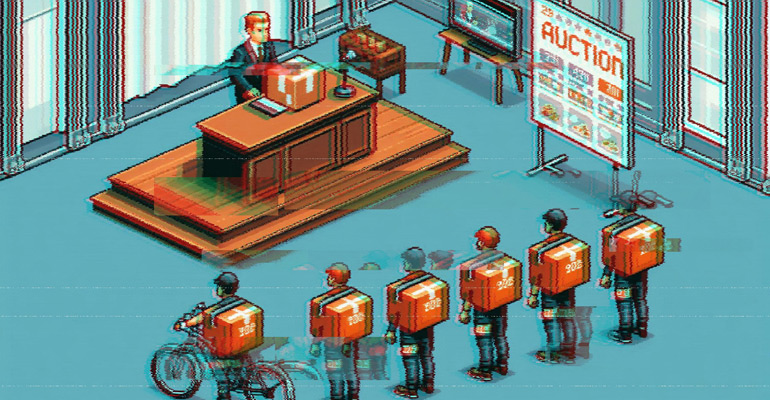
Some Delivery Platforms (e.g. Deliveroo) have implemented a new mechanism for determining the remuneration for work: a “reverse auction”.
So far, it usually (but not always) looked like this: The algorithm would order a delivery to a specific person and at the same time inform them about the remuneration for it. If the employee did not accept the order, it was offered to another person (with the same or different remuneration, at the discretion of the Algorithm).
In the new mechanism, the order is offered to several employees at the same time, with information about the remuneration for it (which is usually abnormally low). Employees have a short time (e.g. 60 seconds) to accept it, with the principle of “first come, first served”. If no one accepts, the offer is displayed again, with different scenarios: e.g. with the same rate but to a different group of employees, or the rate is reduced within the same group, or it is possible to slightly increase the rate. And so on until the result.
This “auction” not only builds an unhealthy sense of hostility among employees, but is also simply dangerous: Suppliers must constantly stare at the screen instead of following the traffic. Additionally, by conducting the “auction”, the Algorithm probes for the lowest rate Suppliers are willing to work for. At the same time, the feeling of instability is deepened, the employee has a dilemma – is it better to take an order with a very low salary or wait for the next one, maybe the rate will be higher? But the Algorithm can suspend my account at any moment because it does not accept orders, and then I will earn absolutely nothing.