
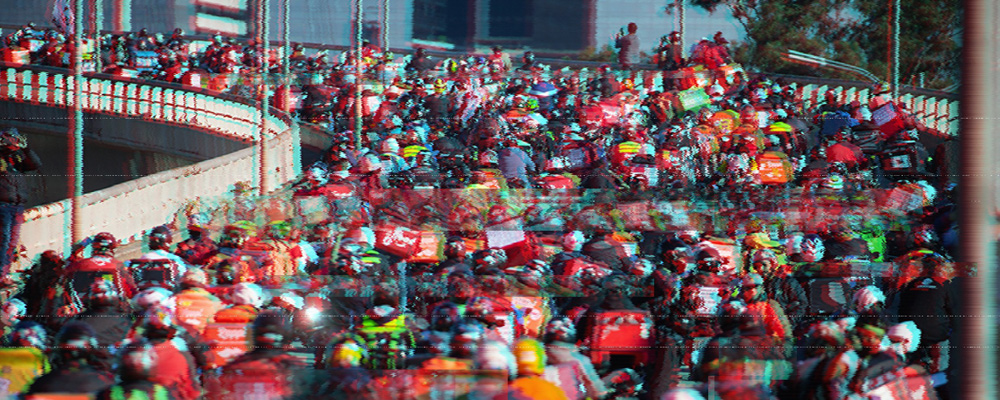
We regularly report on new strikes undertaken by individuals working as Suppliers for Platforms. For example, last Friday, we reported on a strike in India involving over 170,000 people (here).
Successful strikes pose a huge challenge for Platforms. However, they are prepared for them and know how to respond. In these actions, they don’t limit themselves to firing strikers; they also attempt to hijack the narrative. Here are some of the PR activities they are undertaking to deflect attention from the strikers’ demands:
1. The “Record Results” Narrative
Instead of directly addressing the strikers’ demands, Platforms are focusing on publishing data on social media (especially on X) about “historic order peaks.”
Goal: To demonstrate that the strike hasn’t affected orders and that customers are satisfied. Example: During the strike in India, CEOs posted live photos of order counters, emphasizing that thousands of meals were delivered every second.
2. Creating an Image of “Partnership,” Not “Employment”
In official statements, management consistently avoided the word “employee,” using terms like Partner or even the naive “Gig Stars” (referring to the Gig Economy).
Message: Platforms emphasized the “flexibility” and “freedom of choice” they offered to suppliers, suggesting that the strikers were merely a small group of people who “did not understand the benefits of the gig economy.”
3. “Everyday Heroes” Campaigns
During the protests, more human-interest stories appeared in traditional and social media. These featured stories of specific suppliers who, thanks to their work on the app, funded their children’s education or bought a house.
Goal: Softening the corporate image and portraying the platform as a tool for social advancement, which was intended to neutralize accusations of low wages.
4. Public Declarations of Safety
In response to criticism of the “10-Minute Model” (during the recent strike in India), platforms began massively promoting their AI systems, which supposedly “optimize routes without the need for fast driving.”
Action: Press conferences were held to showcase new in-app features, such as the “SOS button” and automatic accident insurance, to demonstrate that courier well-being was a priority.
5. “Targeted PR” Aimed at the Middle Class
Management effectively managed consumer sentiment. When deliveries were delayed due to the strike, the platforms sent notifications: “We apologize for the delay, our partners are ensuring the highest quality of your order.”
Result: Shifting responsibility for “difficult operating conditions” while simultaneously building customer loyalty by offering discount coupons for patience.